Energy-to-compute platform
Build local AI. Power it smarter.
SOL.COLLEGE is where solar generation, battery storage and AI compute are designed together — with training, an open sizing calculator, reference node designs and a pilot programme for teams that want measured results rather than claims.
Self-built compute. Professionally commissioned energy.
- Courses across six pathways
- 12Courses across six pathways
- Sol Node reference tiers
- 3Sol Node reference tiers
- Standard pilot cycle
- 6 weeksStandard pilot cycle
- Site data stays local by default
- 100%Site data stays local by default
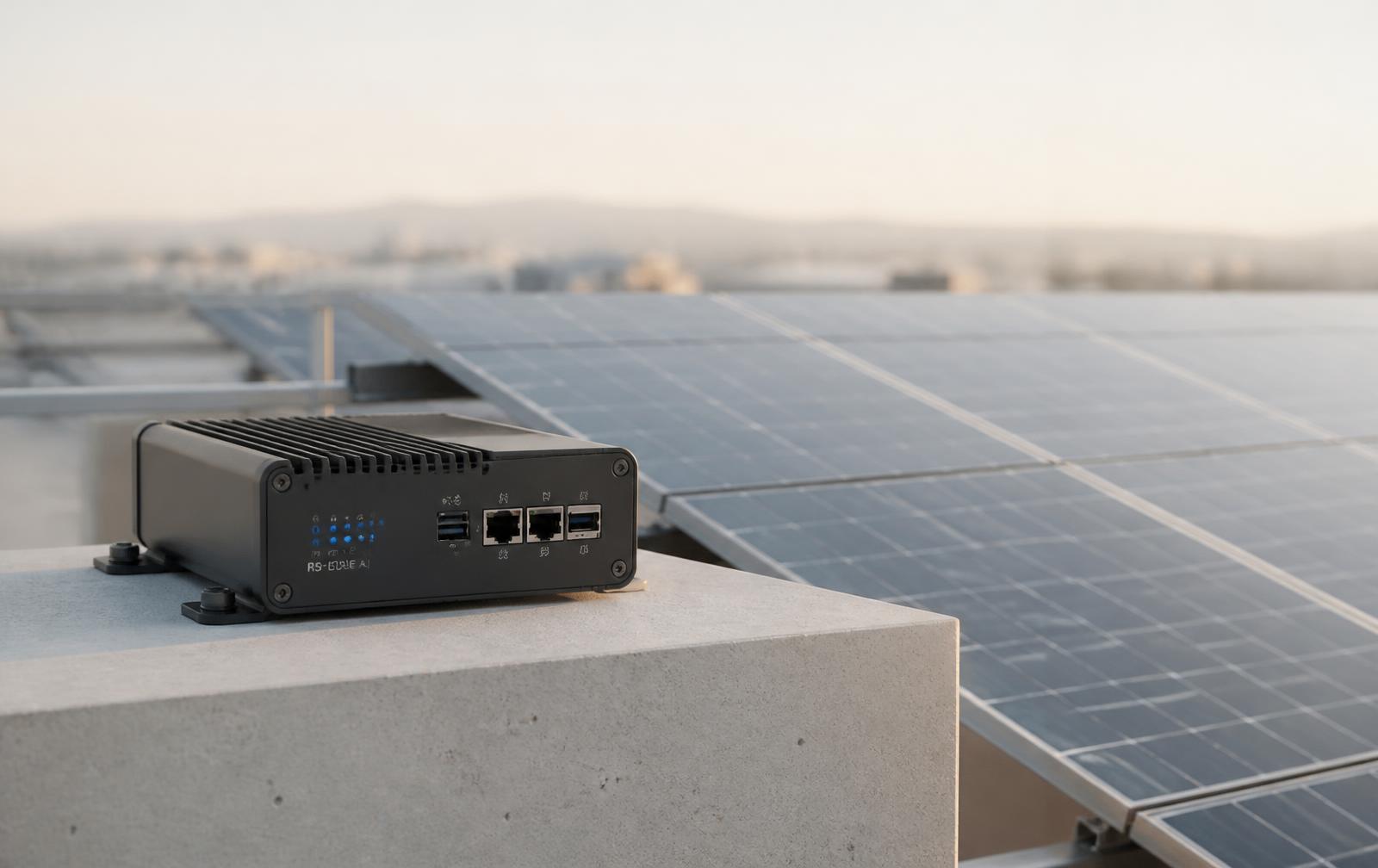
Live energy path
Illustrative readoutsSolar array
3.8 kW
Battery
74%
Controller
Solar-first
Sol Node
620 W
Workloads
68% solar
- Solar generation
- 3.8 kW
- Battery state
- 74%
- Node draw
- 620 W
- Policy
- Solar-first
What we teach and build
Four disciplines, one operating model
Solar, storage, compute and workload policy are usually taught apart. Running an AI node on your own generation means treating them as one system.
Solar and storage literacy
Read generation profiles, size storage honestly and understand what a battery reserve is actually protecting.
Local AI on hardware you own
Model selection, quantisation and serving limits matched to the power budget of a real node.
Energy-aware workload planning
Classify work by urgency, defer what can wait and schedule compute around generation and tariffs.
Operations you can defend
Monitoring, thermal management, incident handling and reporting that states its own uncertainty.
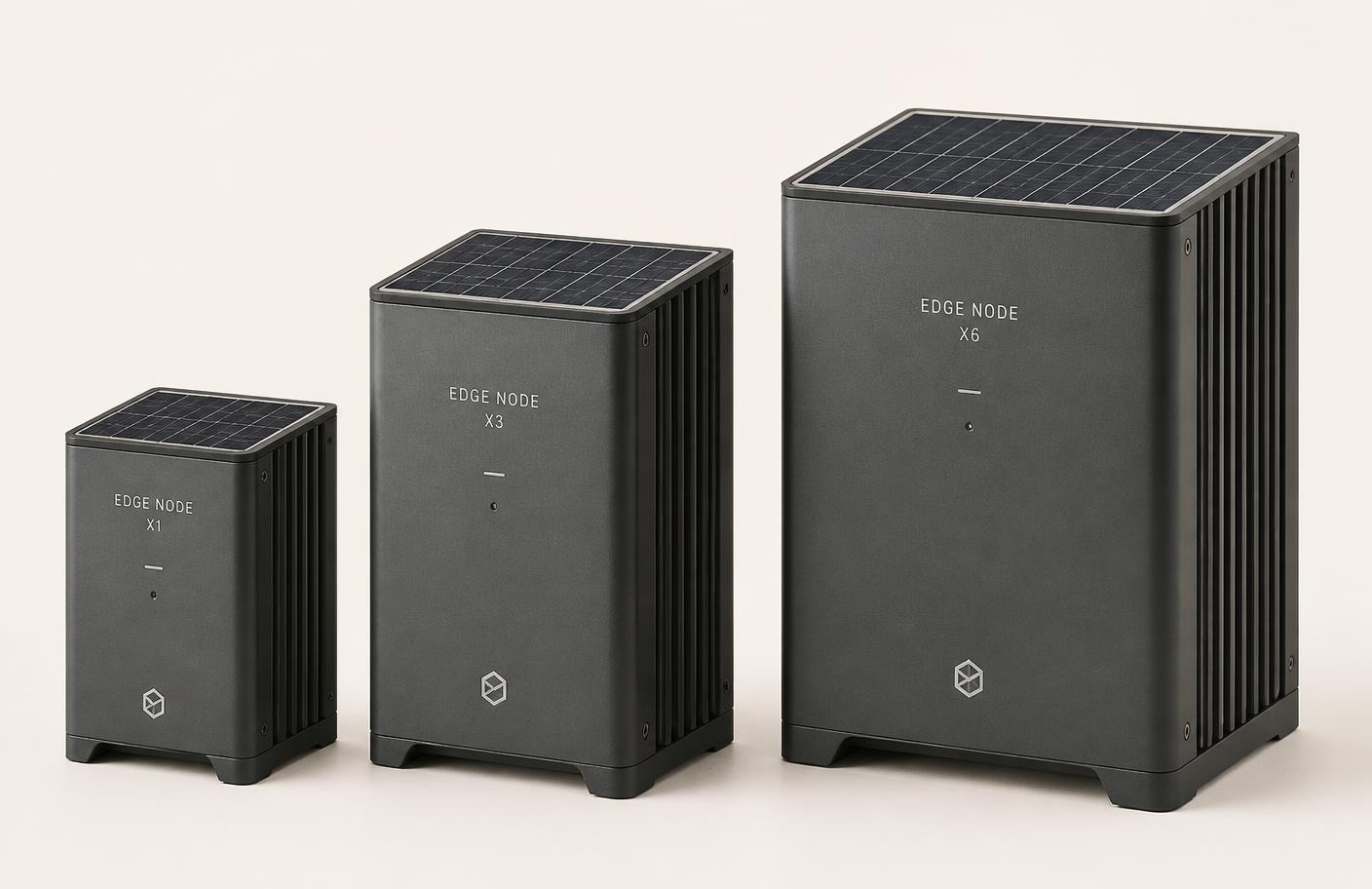
Sol Node
Reference designs, not a black box
Three documented node tiers with published idle draw, sustained load and thermal envelopes, so you can plan supply before you buy anything.
Node designs cover compute, monitoring and siting. All grid-connected solar, battery and electrical work must be designed and commissioned by competent professionals.
Choose your node
Three starting points, one operating model
Pick the tier that matches your workload and the supply you can realistically commission. No prices here — configurations are quoted after a site conversation.
Individual builders
Sol Node Lite
One person running small language models, document assistants and sensor analytics at a single site.
- Sustained load
- 90–160 W
- Storage pairing
- 2–5 kWh usable
Small teams
Sol Node Studio
Team-scale inference, embeddings and retrieval with measured burst headroom for busier hours.
- Sustained load
- 320–620 W
- Storage pairing
- 5–15 kWh usable
Institutions
Sol Node Pro
Campus and multi-tenant workloads, scheduled batch pipelines and per-workload energy accounting.
- Sustained load
- 0.9–2.4 kW
- Storage pairing
- 15 kWh and above
How it works
From measurement to running workloads in four steps
- 01
Measure your supply
Start from real generation, tariff and site data rather than an assumed best case.
- 02
Size the node
Use the planner to match load, runtime and storage to the share of solar you can allocate.
- 03
Commission safely
Energy work is designed and signed off by qualified professionals; you build and own the compute.
- 04
Operate on policy
Schedule workloads by urgency and generation, then review measured results honestly.
Use cases
Where solar-aware compute already makes sense
Work that can be batched, deferred or kept on site benefits most from generation-aware scheduling.
Document and knowledge assistants
Retrieval over internal documents that never leaves the site.
Overnight batch analysis
Reports, summaries and embeddings queued for the strongest generation window.
Edge vision and monitoring
On-site inference for cameras and sensors without continuous upload.
Research and teaching clusters
Shared inference capacity for courses, labs and student projects.
Community and rural connectivity
Local services that stay useful when the link to the wider network is poor.
Cost-aware model serving
Keep steady, predictable workloads on hardware you own and measure.
Responsible deployment
Clear boundaries, stated plainly
Education and planning only
Everything here is a planning aid. We publish ranges and assumptions, never guarantees of savings or returns.
Professional energy work
Grid-connected solar, battery and electrical installation must be designed and commissioned by competent professionals.
Data stays local by default
Node workloads run on your hardware. Nothing is sent off site unless you deliberately configure it.
Learn
Six pathways from first principles to live operations
Short, practical courses built around measurement. Start free, then move into the operator pathway.
Solar and Storage Foundations
How photovoltaic generation, inverters and battery storage behave across a day and a year, and what that means for loads you control.
Local AI and Edge Compute
Running models on hardware you own: sizing, quantisation, serving, storage and realistic performance expectations.
Energy-Aware Workload Design
Classifying workloads, writing operating policies and scheduling compute around generation, storage and tariffs.
Sol Node Operator Pathway
Day-to-day operation: monitoring, thermal management, updates, incident handling and reporting on a live node.
Solar Site Intelligence
Using local AI on site data — inspection imagery, performance anomalies, documentation and asset records.
Responsible Infrastructure and Safety
Boundaries of competence, commissioning requirements, privacy, security and honest performance reporting.
- PV and storage basics for compute builders3.5 hours
- Sizing generation against a controllable load4 hours
- Running local LLMs on hardware you own5 hours
- Workload classification and deferral3 hours
Pilot programme
One workload. One baseline. Six weeks.
Teams apply with a single measurable outcome. We help define the baseline, run the node and publish an honest report — including what did not work.
Resources
Field notes from energy-aware compute
Practical writing on power measurement, scheduling policy, commissioning and privacy.
Energy-aware compute
What is energy-aware compute?
Energy-aware compute treats electricity availability, price and carbon intensity as first-class scheduling inputs alongside deadlines and priority.
7 min read
Local AI
How much power does a local AI node use?
A grounded look at idle draw, inference bursts and sustained load across compact, workstation-class and rack-mounted local AI hardware.
9 min read
Energy-aware compute
Solar-first AI workloads: what works best?
Some AI workloads shift comfortably into daylight hours. Others cannot. Here is a practical way to tell them apart.
6 min read
SOL.COLLEGE publishes ranges, not guarantees. Every estimate on this site is a planning aid and depends on your site, climate, tariff and hardware.